

The integration of artificial intelligence into the corporate structure has transitioned from a futuristic experiment to a fundamental requirement for modern business survival. Large-scale organizations are increasingly discovering that traditional manual processes are insufficient to handle the sheer volume of data generated in today’s digital economy. By adopting AI-driven solutions, enterprises can unlock hidden efficiencies that were previously buried under layers of administrative bureaucracy and fragmented information. This technological shift allows leaders to make high-stakes decisions based on real-time predictive analytics rather than outdated historical reports or gut feelings. Furthermore, artificial intelligence enables a level of personalization in customer service and marketing that was once thought impossible at scale.
As companies race to automate their supply chains and optimize their internal workflows, the gap between AI-adopters and laggards continues to widen significantly. Scalability is no longer just about hiring more people; it is about building a digital nervous system that can process, learn, and adapt without constant human intervention. This article provides a comprehensive look at how global enterprises are utilizing machine learning and neural networks to drive unprecedented revenue growth. We will examine the specific frameworks and strategic implementations that allow businesses to expand their reach while simultaneously lowering their operational costs.
The Foundation of AI-Driven Scalability

To achieve true scalability, an enterprise must first build a robust data infrastructure that can feed advanced algorithms. Artificial intelligence is only as good as the data it consumes, meaning that “siloed” information is the greatest enemy of progress.
Modern companies are moving toward centralized data lakes that provide a single source of truth for the entire organization. This unified approach allows AI models to see the “big picture” across different departments, from finance to manufacturing.
A. Data Centralization and Cleaning
Before AI can be deployed, an organization must ensure its data is clean, formatted, and easily accessible. Messy data leads to “algorithmic bias” and inaccurate predictions that can damage the business.
B. Cloud-Native AI Architectures
Scaling AI requires massive computing power that is only feasible through cloud infrastructure. Using cloud-based AI services allows companies to pay only for what they use while maintaining the ability to spike their capacity instantly.
C. The Role of Neural Networks
Neural networks mimic the human brain to identify complex patterns within large datasets. They are particularly effective for tasks like image recognition, natural language processing, and anomaly detection in financial transactions.
D. Interoperability Between Legacy Systems
For AI to be effective, it must be able to communicate with the older software systems that many enterprises still rely on. Middleware and APIs are used to bridge this gap, ensuring a smooth flow of information.
E. Establishing Ethical AI Governance
Scalability must be balanced with responsibility to avoid legal and reputational risks. Companies are establishing internal boards to monitor how AI makes decisions, ensuring transparency and fairness at every level.
Automating Operational Workflows
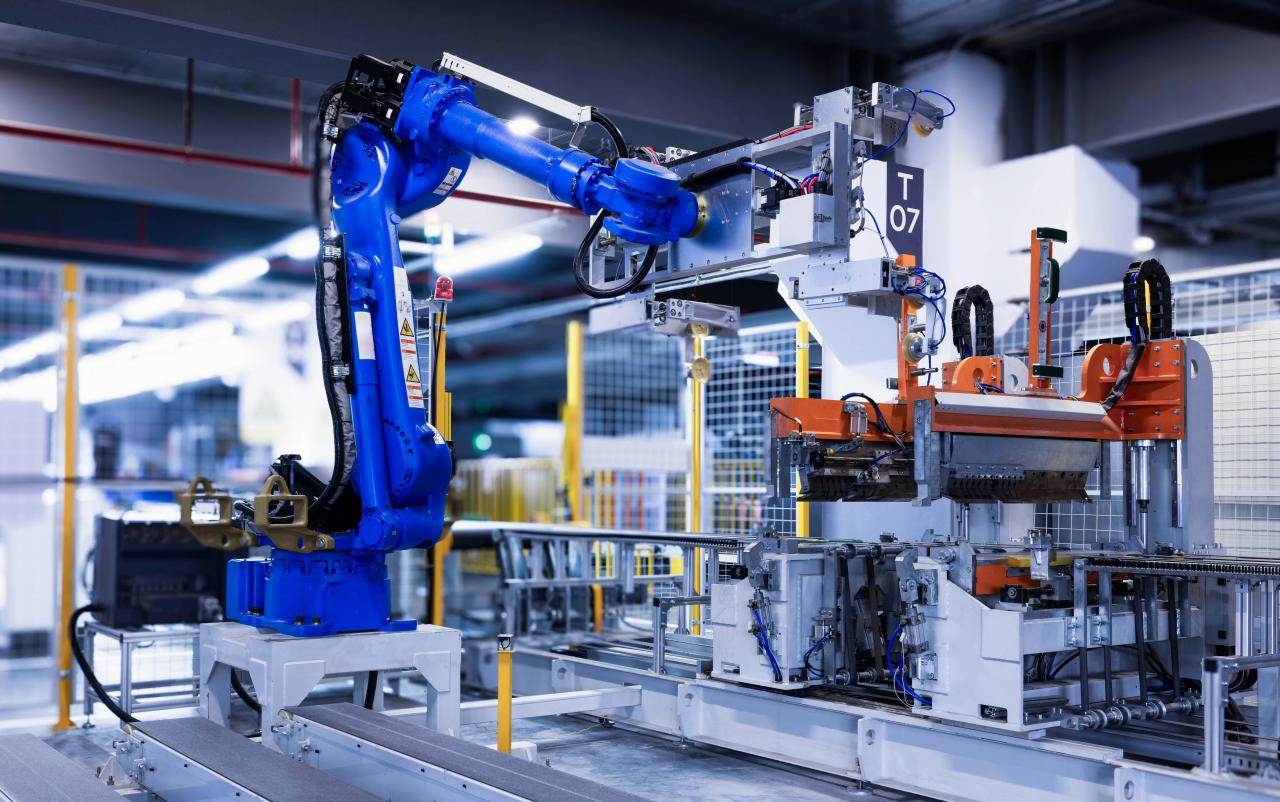
One of the most immediate benefits of AI is the automation of repetitive, low-value tasks that drain employee energy. This is often referred to as Robotic Process Automation (RPA), but with an added layer of “intelligence.”
By automating these workflows, companies can redirect their human talent toward creative problem-solving and strategic planning. This shift not only saves money but also improves employee morale by removing the “drudgery” of manual data entry.
A. Intelligent Document Processing (IDP)
AI can read, understand, and categorize thousands of invoices, contracts, and emails in seconds. This reduces the need for large administrative teams and speeds up the “order-to-cash” cycle.
B. Predictive Maintenance in Manufacturing
By analyzing sensor data from machinery, AI can predict when a part is likely to fail before it actually breaks. This prevents costly downtime and ensures that the production line remains scalable and efficient.
C. Supply Chain Demand Forecasting
AI models analyze weather patterns, social media trends, and economic indicators to predict future product demand. This allows enterprises to optimize their inventory levels, reducing both waste and stockouts.
D. Automated Talent Acquisition and HR
AI can scan thousands of resumes to find the perfect match for a specific role based on skill sets and cultural fit. This streamlines the hiring process, allowing the company to scale its workforce more effectively.
E. Financial Reconciliation and Fraud Detection
Real-time AI monitoring can identify suspicious transactions as they happen, preventing loss before it occurs. It also automates the month-end closing process, which traditionally takes teams days of manual work.
Enhancing Customer Experience at Scale
In the past, providing a personalized experience to millions of customers was physically and financially impossible. AI has changed this by allowing for “hyper-personalization” through automated interaction and recommendation engines.
Customers now expect brands to know their preferences and anticipate their needs before they even ask. Meeting these expectations is the key to building brand loyalty and increasing the lifetime value of every customer.
A. AI-Powered Chatbots and Virtual Assistants
Modern bots use Natural Language Understanding (NLU) to solve complex customer issues without human help. They are available 24/7, providing instant support that scales perfectly with user growth.
B. Dynamic Pricing and Revenue Management
AI analyzes market demand, competitor pricing, and user behavior to adjust prices in real-time. This is used by airlines and hotels to maximize revenue during peak periods while staying competitive.
C. Personalized Marketing and Content Curation
Recommendation engines, similar to those used by Netflix or Amazon, ensure that users only see products they are likely to buy. This targeted approach significantly increases conversion rates and marketing ROI.
D. Sentiment Analysis for Brand Monitoring
AI can monitor millions of social media posts to gauge public opinion about a company. This allows brands to react quickly to negative feedback and double down on what customers love.
E. Predictive Customer Churn Modeling
By identifying patterns in user behavior, AI can predict which customers are likely to cancel their subscriptions. This gives the marketing team a chance to offer a targeted incentive to keep them.
AI in Strategic Decision Making
The “C-suite” of the future will rely on AI as a co-pilot for high-level strategic planning. Instead of relying on intuition, leaders can use “digital twins” of their business to simulate different scenarios.
This “simulation-based” leadership reduces the risk of major strategic blunders and allows for more aggressive experimentation. Companies can test the impact of a new product launch or a merger in a virtual environment before committing resources.
A. Digital Twins for Organizational Modeling
A digital twin is a virtual replica of a company’s entire operation. AI can run thousands of “what-if” scenarios on this model to find the most efficient path forward.
B. Market Entry and Competitive Intelligence
AI scans the global market to identify emerging competitors and new opportunities. This “early warning system” allows enterprises to pivot their strategy before they are disrupted by a startup.
C. Optimizing Capital Allocation
AI models help CFOs decide where to invest their capital for the highest return. It considers risk factors and market volatility to ensure the company’s portfolio remains resilient.
D. Real-Time KPI Tracking and Alerts
Instead of waiting for a monthly meeting, leaders get real-time alerts when a Key Performance Indicator (KPI) goes off track. This allows for “micro-adjustments” that keep the business moving toward its goals.
E. Succession Planning and Leadership Development
By analyzing performance data and behavioral traits, AI can identify the “hidden gems” within an organization. This ensures a steady pipeline of future leaders who are ready to take the company to the next level.
Overcoming the Technical Debt Barrier
Many enterprises are held back by “technical debt”—the accumulated cost of maintaining old, inefficient software. Moving to an AI-first model requires a systematic “refactoring” of these legacy systems.
While the initial investment in modernizing infrastructure is high, the cost of doing nothing is much higher. Scalability is impossible on a foundation of “spaghetti code” and disconnected databases.
A. Microservices and Containerization
Breaking down large software “monoliths” into small, independent services makes them easier for AI to interact with. It also allows the system to scale horizontally by adding more small containers as needed.
B. Implementing a “Data First” Culture
Technology is only half the battle; the other half is mindset. Every employee must understand that their data is a valuable corporate asset that must be protected and shared.
C. The Role of MLOps (Machine Learning Operations)
MLOps is the practice of automating the deployment and monitoring of AI models. It ensures that models stay accurate over time and can be updated without disrupting the business.
D. Securing the AI Pipeline from Cyber Threats
As AI becomes more central to a business, it also becomes a target for hackers. “Adversarial AI” is a new threat where attackers try to trick the algorithm into making bad decisions.
E. Phased Integration vs. “Big Bang” Migration
The most successful enterprises don’t try to change everything overnight. They start with small “pilot” projects and slowly expand AI integration as they prove the value of each use case.
Ethical AI and Regulatory Compliance
As AI systems take on more responsibility, they are coming under the scrutiny of governments and regulators. Compliance is no longer just a legal hurdle; it is a competitive advantage for building consumer trust.
Enterprises must be able to explain how their AI arrived at a specific decision, especially in sensitive areas like hiring or lending. This is known as “Explainable AI” (XAI) and is a core requirement for any scalable system.
A. Algorithmic Transparency and Auditability
Companies must maintain “audit trails” for their AI models. This allows them to prove that no biased data was used and that the system followed all internal and external rules.
B. Bias Detection and Mitigation Frameworks
AI can accidentally learn human biases from historical data. Sophisticated tools are now used to “un-bias” datasets, ensuring that AI decisions are fair to all demographic groups.
C. Compliance with the EU AI Act and Global Rules
New laws are setting strict boundaries for high-risk AI applications. Enterprises must stay ahead of these rules to avoid being locked out of major global markets.
D. Data Sovereignty and Privacy Protections
With laws like GDPR, companies must be careful about where they process their data. AI systems must be designed to respect local privacy laws while still providing global insights.
E. Human-in-the-Loop (HITL) Decision Models
For high-stakes decisions, AI should provide the recommendation while a human makes the final call. This “augmented” approach combines the speed of AI with the moral judgment of a person.
The Future of AI and the “Autonomous Enterprise”
We are moving toward the era of the “Autonomous Enterprise,” where the majority of day-to-day operations are self-managing. In this world, the company behaves more like a living organism that reacts to its environment in real-time.
This doesn’t mean humans disappear; it means their roles shift toward high-level vision and creative innovation. The autonomous enterprise is the ultimate form of scalability, as it can grow without being limited by human processing speed.
A. Self-Healing Networks and Infrastructure
In the future, corporate IT systems will identify and fix their own bugs. This “self-healing” capability ensures 100% uptime and allows the tech team to focus on building new features.
B. Generative AI for Product Design and R&D
AI can suggest thousands of different product designs based on specific constraints like weight, cost, and durability. This accelerates the R&D cycle by years, allowing for faster market entry.
C. Autonomous Negotiations and Procurement
Imagine two AI agents negotiating a supply contract in milliseconds. This removes the “friction” of business and ensures that the company always gets the best possible price for its materials.
D. Decentralized AI and the “Edge” Economy
Instead of sending all data to a central server, AI will live on individual devices. This “edge” processing provides instant results and better privacy for the user.
E. The Emergence of the “Fractional” Workforce
As AI handles the core work, companies will increasingly rely on “fractional” experts for specific projects. This flexible model allows the enterprise to scale its talent pool up and down instantly.
Conclusion
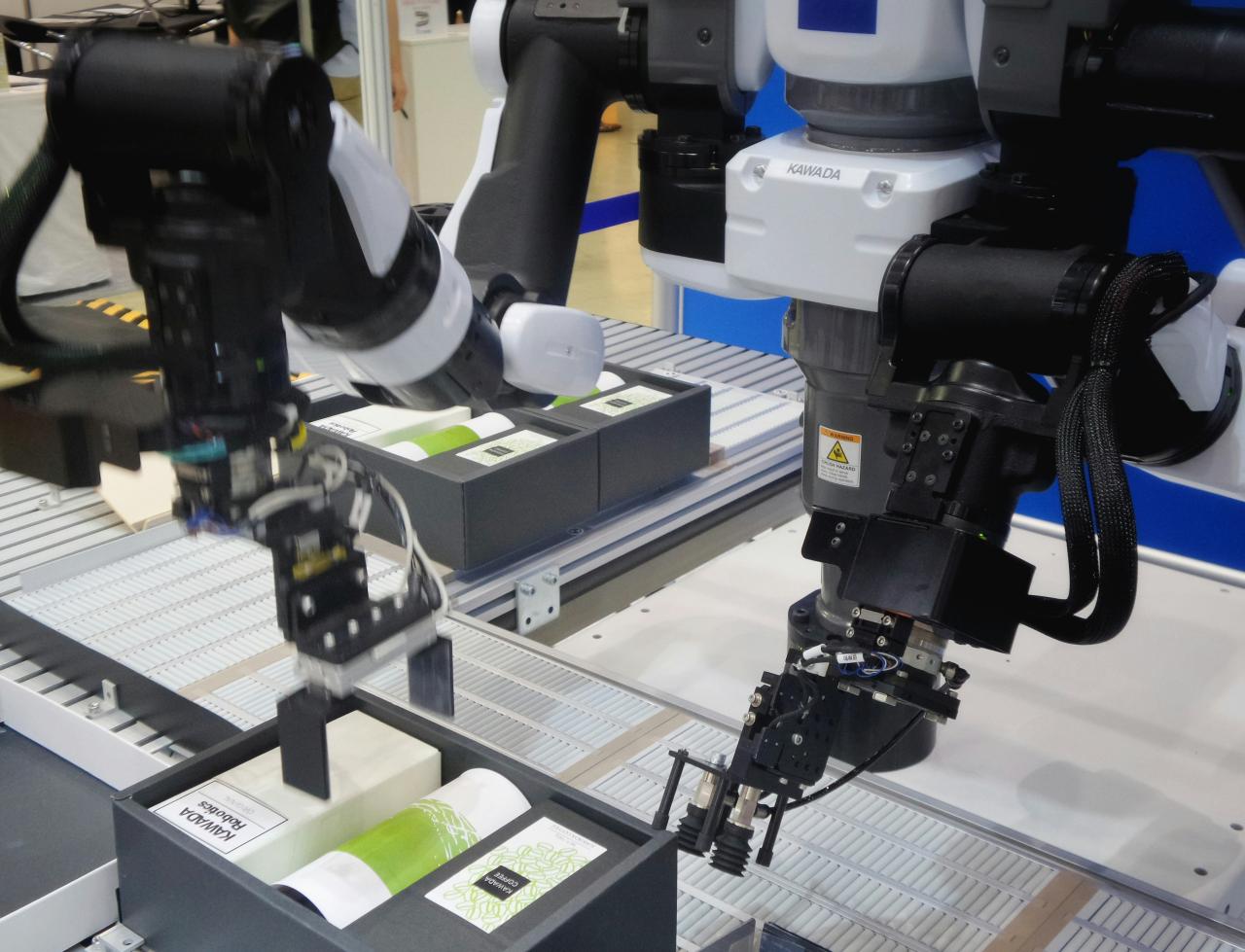
Leveraging artificial intelligence is the only viable path to achieving scalable growth in the modern era. The foundation of every successful AI initiative is a clean and centralized data infrastructure. Automating operational workflows allows a company to scale its output without a massive increase in headcount. Hyper-personalization through AI creates a competitive edge in customer experience that is impossible to replicate manually. Strategic decision-making is becoming more accurate thanks to the use of digital twins and predictive modeling. Modernizing legacy systems is a painful but necessary step toward becoming an AI-first organization. Ethical governance and regulatory compliance are essential for maintaining long-term public and legal trust.
The rise of the autonomous enterprise will redefine the relationship between humans and technology in the workplace. Cloud computing provides the flexible power needed to run and scale complex machine learning models globally. Machine learning is not a “set and forget” tool but a dynamic system that requires constant monitoring and updates. Transparency in AI decision-making is the key to successfully integrating these tools into sensitive business sectors. The future of business belongs to those who view AI as a strategic partner rather than just a technical tool. Scaling an enterprise today requires a digital nervous system that is as adaptable as the market itself.